
Top Advanced Logistics & Supply Chain Tech Sub-Sectors Booming Through 2031
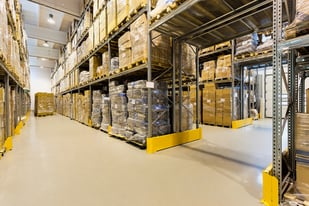 While physical transportation networks move goods from point A to point B, the software and automation platforms managing these operations represent the true nervous system of global trade. Driven by post-pandemic supply chain vulnerabilities, labor shortages, and consumer demand for faster delivery times, companies are investing heavily in advanced logistics technology.
Highlighting these high-growth sub-sectors will allow you to capture B2B search traffic from enterprise logistics managers, warehouse operators, and supply chain executives.
The key niches expected to lead market growth through 2031 include:
Autonomous Mobile Robots (AMRs) & Warehouse Automation
This sub-sector includes autonomous mobile robots, automated guided vehicles (AGVs), and smart picking platforms deployed within distribution centers and fulfillment facilities. Unlike traditional fixed conveyors, AMRs utilize LiDAR, AI vision, and spatial mapping to navigate warehouses dynamically, assisting human workers with order picking, sorting, and inventory transport. Chronic labor shortages in warehousing, combined with the exponential growth of e-commerce order volume, have made manual order picking inefficient. AMRs increase fulfillment speeds by three to five times while reducing error rates to near zero, giving warehouses the agility to handle sudden demand surges.
In the report Autonomous Mobile Robots (AMRs) Market Forecasts to 2034 – Global Analysis By Robot Type (Goods-to-Person Robots, Autonomous Forklifts, Autonomous Tuggers, Autonomous Cart Robots, Inventory Scanning Robots, Humanoid Mobile Robots and Other Robot Types), Stratistics MRC states the Global Autonomous Mobile Robots (AMRs) Market is accounted for $5.5 billion in 2026 and is expected to reach $16.1 billion by 2034 growing at a CAGR of 19.6% during the forecast period. The development of fleet management software capable of coordinating hundreds of heterogeneous autonomous mobile robots presents substantial market expansion opportunities. Advanced orchestration platforms dynamically allocate tasks across robot types based on proximity, battery level, and payload compatibility. Cloud-based fleet optimization leverages machine learning to predict traffic patterns and prevent congestion in high-density warehouse environments. End users benefit from scalable deployments that grow incrementally with business volume. The commercial momentum favors vendors offering software-defined fleet coordination as a competitive differentiator beyond individual robot hardware.
Predictive Supply Chain Analytics
Predictive supply chain analytics software leverages machine learning, real-time IoT tracking, and historical operational data to forecast logistics disruptions, optimize inventory placement, and automate rerouting. These platforms allow companies to transition from reactive troubleshooting to proactive supply chain management.
Persistent geopolitical friction, port congestion, and climate-related shipping delays have exposed the fragility of legacy supply chains. Global enterprises are investing in predictive tools to build resilient networks capable of anticipating bottlenecks before they impact the bottom line.
TechNavio’s Global Supply Chain Analytics Market 2026-2030 forecasts this market to to grow by USD 18755.2 mn during 2025-2030, accelerating at a CAGR of 22.6% during the forecast period. This study identifies the rapid evolution toward autonomous agentic decision intelligence replaces passive descriptive analytics dashboards as one of the prime reasons driving the global supply chain analytics market growth during the next few years. Also, enterprise migration toward cloud native analytics platforms enhances cross organizational data synchronization and strategic convergence of corporate financial planning and operational supply chain analytics drives profitability will lead to sizable demand in the market.
Cold Chain Monitoring & Smart Logistics
This specialized area focuses on IoT-enabled telematics, automated temperature logging sensors, and real-time tracking systems engineered for temperature-controlled logistics networks. These tools continuously record environmental conditions (such as temperature and humidity) for perishable food, vaccines, and biopharmaceuticals throughout transit.
Regulatory mandates regarding food safety (like FSMA) and strict temperature requirements for sensitive biologic drugs require absolute visibility. Smart cold chain technologies prevent millions of dollars in product spoilage by triggering real-time alerts the moment a cooling system fails.
The Cold Chain Logistics Market size was estimated at USD 456.14 billion in 2025 and expected to reach USD 520.96 billion in 2026, at a CAGR of 14.56% to reach USD 1,181.62 billion by 2032, notes 360iResearch in Cold Chain Logistics Market by Service Types (Storage Services, Transportation, Value-Added Services), Solution Type (Hardware, Software, Packaging), Temperature Range, End-Use – Global Forecast 2026-2032. Demand is being driven by biologics and specialty medicines, cross-border food trade, e-commerce grocery fulfillment, and stricter product integrity rules. The industry is also responding to well-documented food loss and safety challenges: the FAO estimates that about 13% of food is lost between harvest and retail globally, underscoring the operational value of reliable cold chain infrastructure. The cold chain logistics market should be viewed as a compliance-intensive, technology-enabled logistics ecosystem. Competitive advantage increasingly depends on end-to-end visibility, validated processes, energy-efficient refrigeration, resilient capacity planning, and the ability to prove chain-of-custody with auditable data.
The cold chain logistics landscape is shifting from asset-based refrigerated transport toward integrated, data-led temperature assurance. Shippers now expect real-time visibility across refrigerated trucks, reefer containers, cold rooms, fulfillment centers, and last-mile networks. This transition is being accelerated by connected sensors, cloud platforms, GPS telemetry, electronic proof of delivery, and automated exception management.
Yard Management Systems (YMS) & Last-Mile Delivery Tech
This sub-sector encompasses software engineered to manage the flow of trucks, trailers, and cargo in manufacturing plants and distribution facility yards, paired with last-mile optimization software that calculates dynamic delivery routes, dispatches drivers, and manages customer tracking interfaces.
The last mile remains the most expensive and inefficient leg of the entire logistics journey. Yard management software eliminates expensive truck idling and gate bottlenecks, while last-mile optimization tools lower fuel consumption and help logistics operators hit tight delivery windows.
In the report Dock And Yard Management Systems Market Outlook 2026-2034: Market Share, and Growth Analysis By Component(Software, Hardware, Services), By Deployment Mode, By Industry Vertical, By Application, OG Analysis values this market at US$5.9 billion in 2026 and is projected to grow at a CAGR of 10.8% to reach US$13.4 by 2034. Recent trends in the dock and yard management systems market include deeper software connectivity, broader use of analytics and automation, selective localization of supply, and closer collaboration between manufacturers, distributors, service providers, and end users. North America remains important for advanced adoption and premium demand, Europe continues to be shaped by standards, sustainability priorities, and engineering-led development, and Asia Pacific supports manufacturing depth, cost competitiveness, and widening deployment across multiple end uses. Other regions are gaining traction through utility modernization, healthcare expansion, pet care growth, home automation adoption, and stronger commercial distribution networks.